
Microaxial pump cannula
VA-ECMO, IABP, and pVAD cannulas (8–21 Fr) occupy the common femoral artery, mechanically blocking flow to the leg.
Acute limb ischemia
Our mission is to develop intelligent, pressure-controlled perfusion technologies that preserve tissue viability, improve clinical outcomes, and set a new standard of care for patients with compromised blood flow.
Acute Limb Ischemia (ALI) is a sudden loss of blood flow to a limb — a time-critical emergency where perfusion must be restored within hours to avoid tissue loss and amputation.
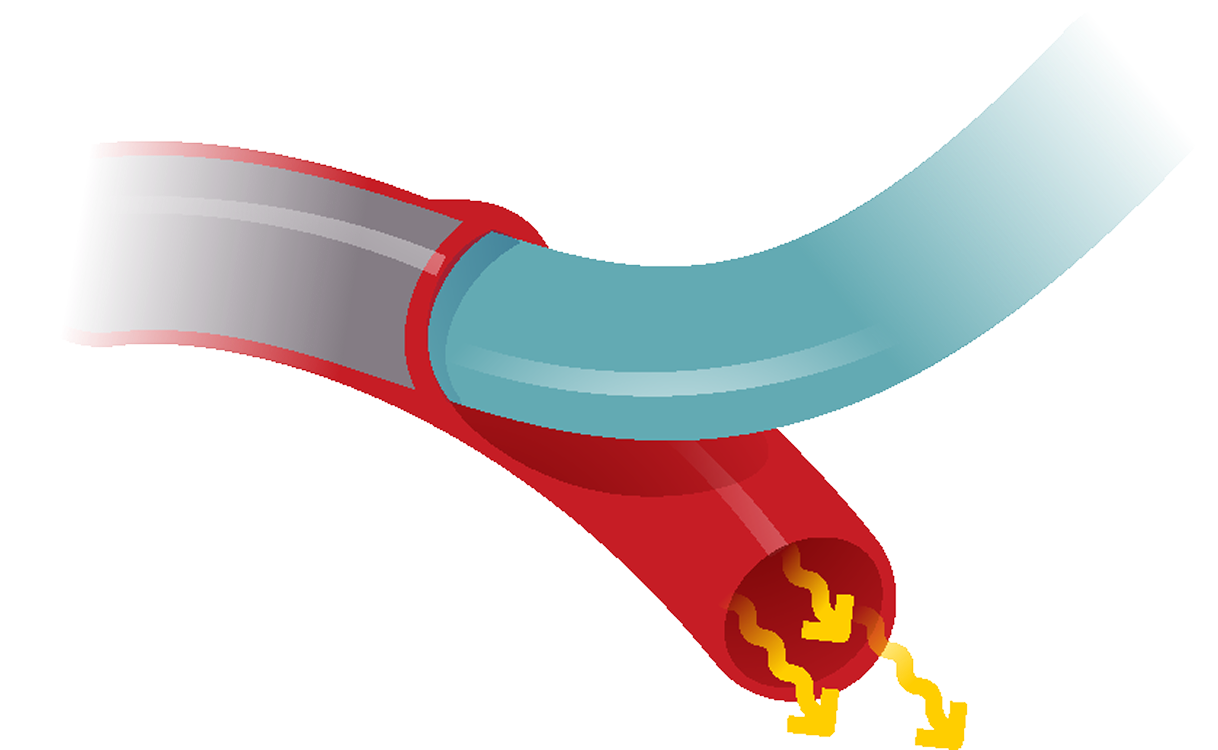
VA-ECMO, IABP, and pVAD cannulas (8–21 Fr) occupy the common femoral artery, mechanically blocking flow to the leg.
Hypotension and vasopressure dependence reduce the pressure that drives blood to the distal limb.
Stagnant flow around the cannula and pre-existing clot occlude the smaller vessels downstream.
Peripheral vascular disease and small-caliber arteries leave little reserve — common in small-body-habitus patients.
Patients undergo high-risk femoral arterial procedures every year
MORTALITYHigher in-hospital death with ALI
DAYS LENGTH OF STAYAdded hospital days per ALI case
CHARGESAdditional hospital charges per case
HOURSUntil loss of muscle occurs
Romero CM, Bashir R, et al. J Vasc Surg. 2023.
Kochar A, Kapur NK, et al. J Heart Lung Transplant. 2024.


Preclinical testing with the Tulyp System confirms the power of pressurized perfusion in a model of bilateral limb ischemia. Initiation of Tulyp after 6 hours of limb ischemia resulted in normalization of mean arterial pressure, microcirculatory flow, and tissue oxygenation compared to the contralateral limb without Tulyp. Additional preclinical studies have shown that active bypass with the Tulyp System provides superior limb perfusion compared to passive bypass (without the Tulyp System).
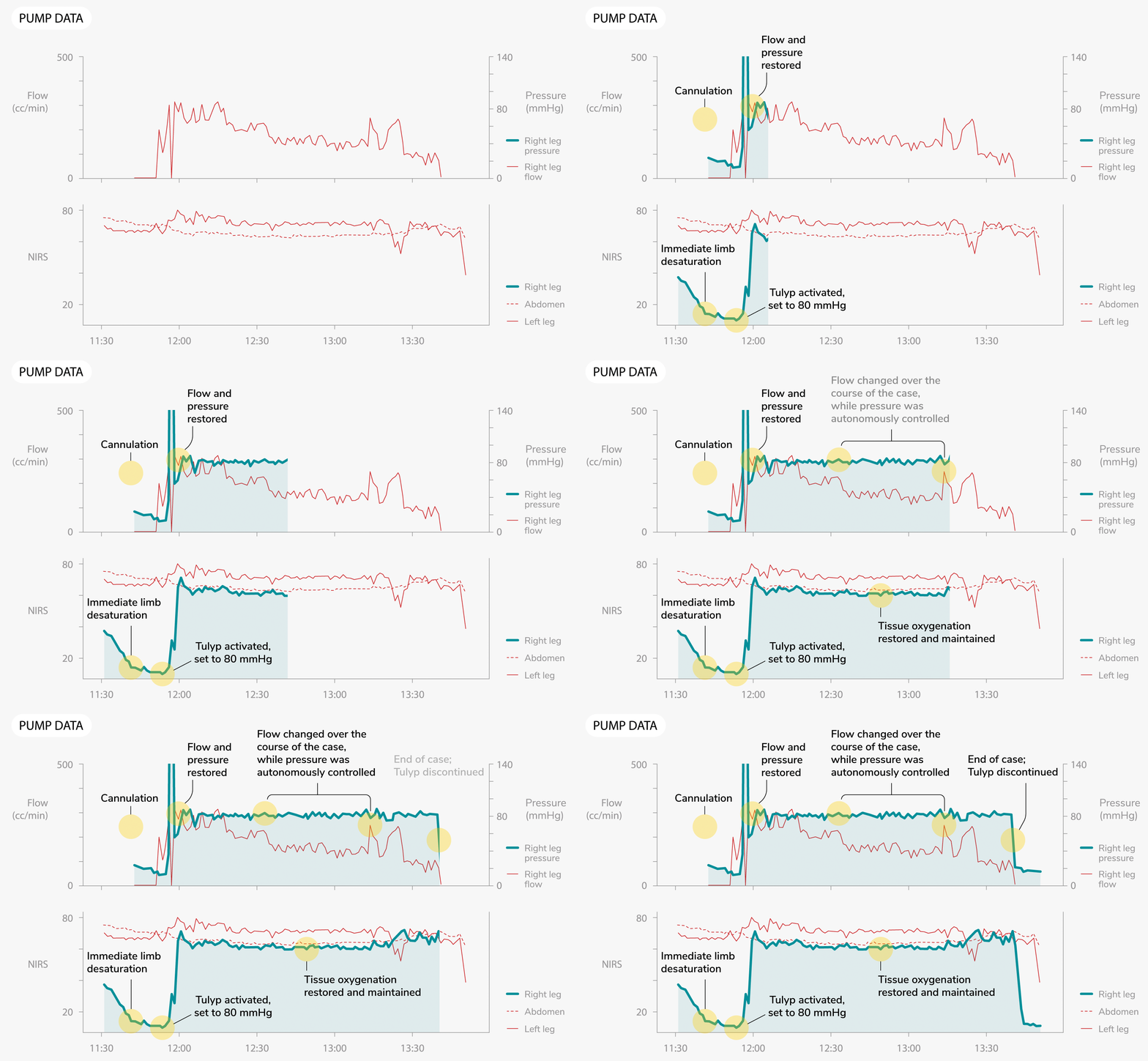
Translation of these mechanistic insights has begun with our first-in-human experience in 9 patients. Six patients undergoing cardiopulmonary support with occlusive femoral arterial cannulation received active bypass with the Tulyp System, demonstrating early safety with no device- or procedure-related adverse events through 24 hours, effective limb perfusion sustained for a median of ~2 hours (98% of support time), and ease of use. Three additional patients undergoing femoropopliteal bypass procedures further demonstrated the feasibility of the platform in a broader vascular surgery setting.
Multiple exits in cardiovascular medtech, deep domain experience in cardiogenic shock and MCS.









The Tulyp Blood Pump is an investigational device currently under development and is not cleared or approved by the U.S. Food and Drug Administration (FDA) or any other global regulatory authority for commercial sale. This device is strictly limited by United States federal law to investigational use only. It is not available for purchase, clinical routine use, or prescription. The safety and effectiveness of The Tulyp Blood Pump have not yet been established. Any data, features, or intended uses described on this website represent ongoing research objectives and are subject to change based on clinical trial results and regulatory review.